
Financial Flash│By Lee, Chen-Lin ( Daniel Lee )李振麟
As markets reassess the Federal Reserve’s policy outlook, the key question remains whether a December rate cut will truly happen. Growing concern that the Fed may not cut rates has weighed heavily on commodities such as copper and gold, both of which have seen increased volatility and downward pressure.
Fed Officials Split on December Rate Cut; Copper and Gold Turn Lower
Federal Reserve Vice Chair Philip Jefferson recently warned that downside risks in the labor market are increasing. With interest rates now close to the neutral level, he noted that investors should remain cautious. Jefferson emphasized that the Fed currently lacks sufficient economic data to accurately assess market trends, meaning that cutting rates prematurely would not be a wise decision. His remarks cooled expectations for a December rate cut and dragged down metals, equities, and other assets that typically benefit from monetary easing.

In contrast, Fed Governor Christopher Waller openly expressed support for a December rate cut. He argued that the labor market has visibly weakened and that high borrowing costs are putting pressure on middle- and lower-income households. Waller pointed out that mortgage and auto-loan burdens have risen sharply, while the strong stock market has not translated into meaningful job creation. Known as one of the more dovish policymakers—and considered a potential candidate for the next Fed Chair—Waller’s views align more closely with the administration’s preference for easing.
Markets are now watching for the September employment report due this Thursday. If the data confirms further labor-market weakness, it could strengthen the case for a rate cut. The release date for the October jobs report remains uncertain, but if it is published before the December FOMC meeting, expectations for easing could increase again. As long as upcoming key data points continue to weaken, the Fed will have sufficient justification to take further action. The same uncertainty is affecting precious metals: gold prices are expected to remain volatile until policy signals become clearer.
Copper Prices Retreat as Weak Chinese Demand and Supply Disruptions Collide
Concerns that the Fed may not cut rates have pushed both LME and COMEX copper prices lower. With China’s short-term consumption still weakening, copper continues to trade within a consolidation range. The increasingly cautious tone from Fed officials has also led to more conservative market sentiment.
LME copper prices pulled back quickly after repeatedly touching record highs, indicating that the momentum behind the rally is fading. Beyond rate-cut expectations, China’s domestic consumption has yet to show a meaningful rebound, and unresolved concerns about industrial overcapacity continue to limit copper’s upside. At the moment, copper prices remain supported mainly by expectations of a future supply shortage, and any stimulus measures introduced by China could help revive industrial-metal demand.
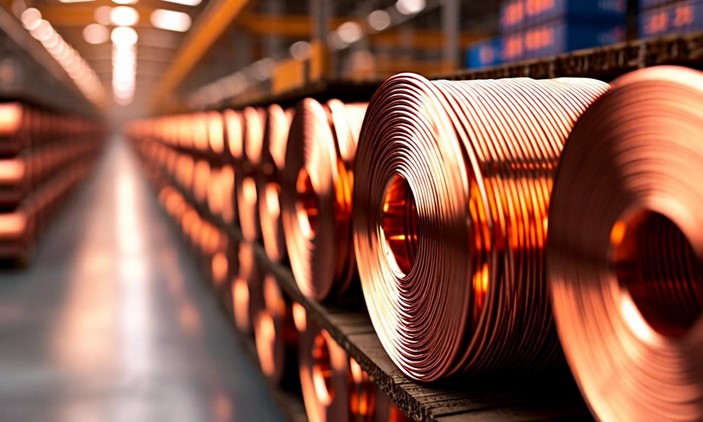
According to UBS, despite the short-term softness in demand, copper prices are expected to strengthen over the next year. Various supply disruptions this year have already removed an estimated 1.3 million tons of mine output from the market, limiting global production growth. UBS forecasts that copper mine supply will grow only around 1% in 2026, far below the expected 3% increase in demand. Refined copper production is also projected to slow due to concentrate shortages and limited scrap availability.
For now, copper prices remain caught between weakening Chinese demand and ongoing supply-chain disruptions, resulting in high-level sideways movement. Only when China introduces stronger consumption-stimulus policies is copper likely to gain new upward support. A combination of improving demand and constrained supply would create the ideal setup for copper’s next major upward trend.