
Financial Flash│By Lee, Chen-Lin ( Daniel Lee )李振麟
Honda’s Dominance Weakens as VinFast’s Electric Models Gain Momentum**
The Vietnamese government is accelerating its transition toward electric mobility, causing significant changes in a motorcycle market long dominated by Honda. In July, Prime Minister Pham Minh Chinh officially approved a plan that will ban gasoline motorbikes from entering the core districts of Hanoi 12 months after the announcement, with restrictions expanding further starting in 2028.
The policy has sent strong shockwaves across the motorcycle industry, sharply boosting demand for electric models. VinFast—often referred to as the “Tesla of Vietnam”—is widely seen as the biggest potential beneficiary.
Recent sales data shows that following the announcement of the gasoline ban, Honda Vietnam’s August sales plunged nearly 22% from July, representing a year-on-year decline of about 13%. Although Honda has also introduced electric motorcycle models, their actual sales performance in Vietnam remains unclear.
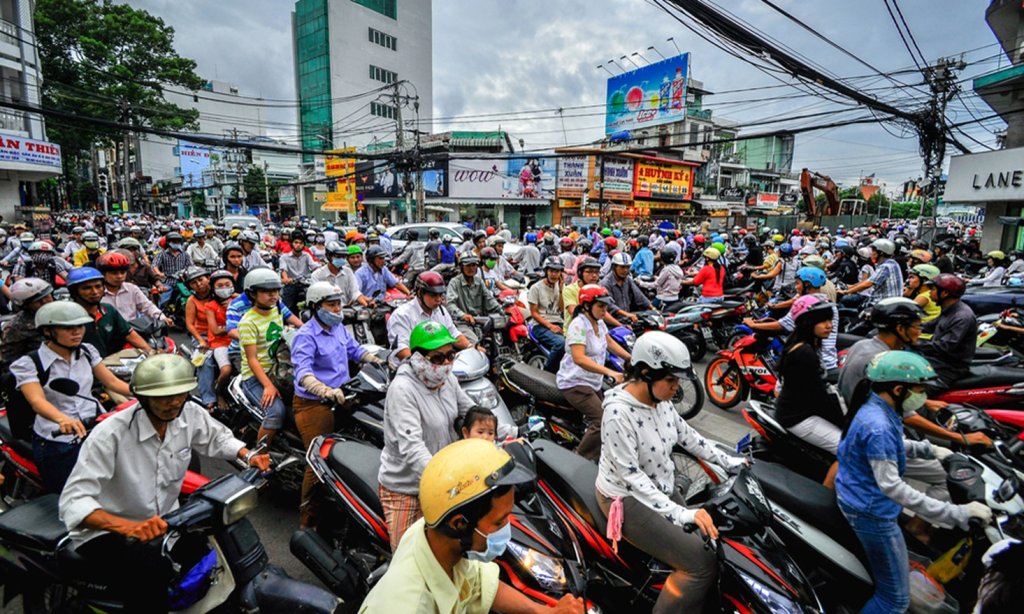
Honda and several other traditional manufacturers have recently submitted letters to regulators criticizing the ban’s implementation timeline as too rushed and the transition burden too heavy. The government, however, stresses that Hanoi’s air pollution consistently ranks among the worst in the world, making strong intervention necessary to achieve meaningful improvement.
Preference for Electric Bikes Far Surpasses Gasoline Models
According to a September survey conducted by Asia Plus in Hanoi and Ho Chi Minh City, 54% of respondents said their next motorcycle purchase would be an electric one, while only 24% preferred gasoline models. In the Hanoi sample, the share favoring electric motorcycles was even higher at 60%.
Although over 80% of current motorcycles on the market are Honda models and only about 4% belong to VinFast, the survey indicates that government policy has already become the primary driver of consumer decision-making—reflecting a rapid shift in public mindset toward electric mobility.
Electric Market Penetration Expected to Exceed Earlier Forecasts
Vietnam’s two-wheel vehicle market is substantial. Industry estimates value the market at approximately USD 4.6 billion in 2025, with potential growth to USD 6 billion by 2030.
Honda sold around 2.6 million motorcycles in Vietnam last year, securing more than 80% market share. During the same period, VinFast delivered about 71,000 electric motorcycles.
If the gasoline ban is implemented as scheduled and supported by subsidies, public awareness campaigns, and infrastructure development, most analysts expect the penetration rate of electric motorcycles to rise faster than previously projected.
Industry Undergoing Structural Transformation
With government policy driving rapid change, Vietnam’s two-wheel industry is on the brink of major structural reorganization:
Traditional Brands
Forced to speed up development of electric product lines
Required to rebuild local supply chains, after-sales services, and charging/refueling networks Facing pressure from inventory adjustments and product-line restructuring
VinFast
Advantages:
Strong domestic brand recognition
More established charging and battery-swapping infrastructure
Alignment with government policy direction
Remaining Challenges:
Battery lifespan and reliability
Density and development speed of charging infrastructure
Ability to lower prices to mass-market levels
- Dealership and Distribution Networks
Short-term challenges include inventory pressure and valuation adjustments
Long-term outcomes depend on battery cost reductions, city-level charging infrastructure, and accessibility of financing and installment payment plans