
Global technology and aerospace industries are once again witnessing a transformative consolidation. Space exploration company SpaceX, led by technology entrepreneur Elon Musk, has officially announced the acquisition of artificial intelligence firm xAI. The combined entity is valued at approximately US$1.25 trillion, setting a new record for privately held technology companies worldwide. The transaction is widely viewed as a strategic integration of aerospace infrastructure with AI computing power, symbolizing a major shift in the global AI race from software and model competition toward energy and computational infrastructure competition.
According to the transaction structure, the acquisition will primarily be conducted through a stock-for-stock exchange. xAI investors will receive 0.1433 shares of SpaceX stock for each share of xAI they hold. Certain executives will have the option to exit via a cash payout of approximately US$75.46 per share. Market analysts generally believe that this arrangement reflects a focus on long-term resource integration and capital allocation rather than short-term financial gains.
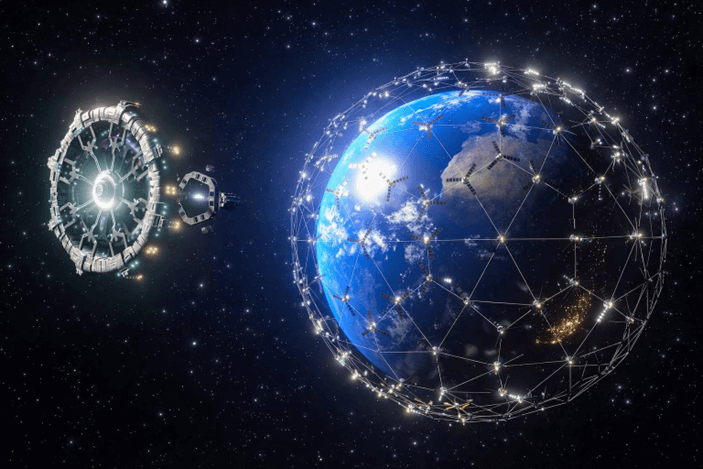
Musk’s Net Worth Reaches New Historic High
According to estimates by Forbes, following completion of the merger, Musk’s personal wealth is expected to increase by approximately US$84 billion, pushing his total net worth to roughly US$852 billion. This would make him the first individual in history to surpass the US$800 billion wealth threshold.
Musk’s current asset portfolio is primarily composed of three core holdings:
‧ Approximately 43% ownership of the merged SpaceX entity, valued at around US$542 billion
‧ Approximately 12% stake in Tesla, valued at about US$178 billion
‧ Tesla stock options worth approximately US$124 billion
In addition, Tesla shareholders have approved a long-term compensation package. If Tesla achieves its targeted valuation growth over the next decade, Musk could receive stock awards valued at up to US$1 trillion, further expanding the influence of his technology empire.
Orbital Data Center Initiative Redefines AI Computing Supply
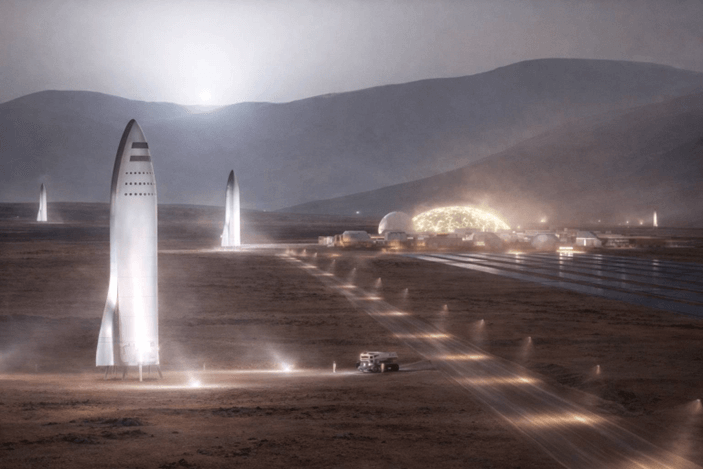
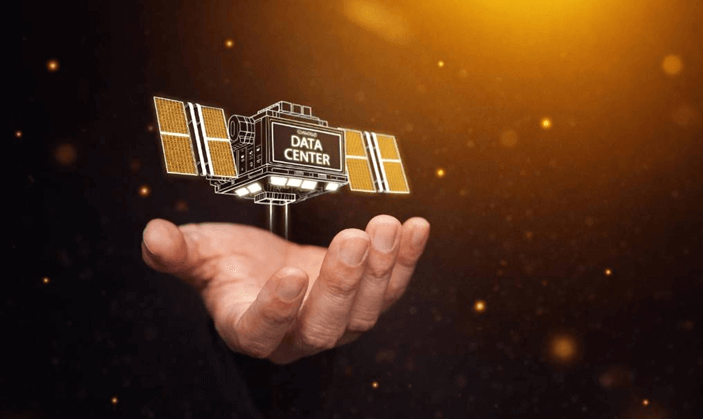
The most strategically significant aspect of the acquisition is the development of an “Orbital Data Center” system. Musk has stated that as AI computing demand grows exponentially, terrestrial power grids and cooling costs are becoming critical bottlenecks restricting AI development. Future low-cost, high-efficiency AI computing may therefore require deployment in space.
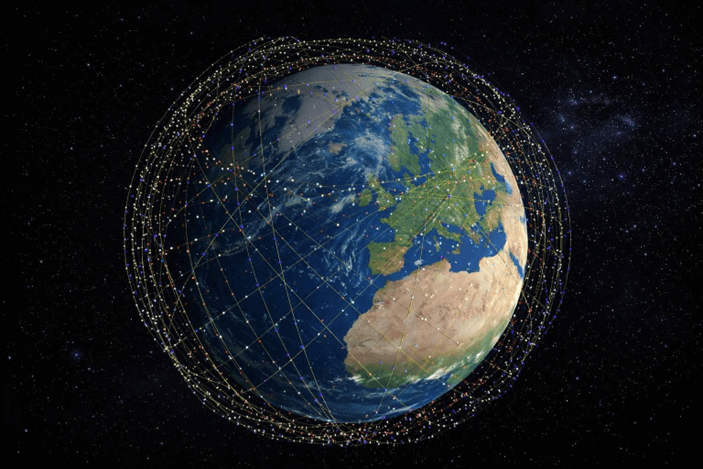
Under current plans, SpaceX has applied to the Federal Communications Commission (FCC) to deploy up to one million satellites equipped with edge computing capabilities. These satellites would utilize virtually unlimited solar energy in space and leverage the naturally low-temperature environment of outer space to reduce cooling costs. Through laser communication links and integration with the Starlink satellite network, the system would form a globally distributed AI computing platform.
However, research firm MoffettNathanson estimates that fully implementing the project could require annual capital expenditures of up to US$5 trillion, roughly equivalent to one-sixth of U.S. GDP. This highlights the project’s heavy reliance on capital market financing and potential government regulatory support.
SpaceX IPO Strategy Draws Intense Market Attention
Market consensus suggests that this acquisition also represents a key preparatory step toward a future SpaceX public offering. Industry analysts predict that SpaceX could initiate an IPO as early as 2026, potentially raising up to US$50 billion. The company’s valuation could reach as high as US$1.5 trillion, making it one of the largest technology IPOs in global history.
Future SpaceX valuation metrics are expected to depend on four critical factors:
‧ Starship mass production and launch cost reductions
‧ Starlink subscriber growth and cash flow expansion
‧ Commercialization progress of orbital computing infrastructure
‧ Long-term global growth in AI computing demand
Nevertheless, the scale of required capital investment also means SpaceX will be highly sensitive to interest rate conditions and global liquidity cycles.
AI Industry Competitive Logic Shifts Toward Energy and Infrastructure
The merger is widely viewed as a turning point in AI industry development. Historically, AI company valuations have relied primarily on model performance and application scenarios. Going forward, competition is expected to increasingly focus on foundational infrastructure capabilities.
Past Competitive Drivers
‧ AI models and algorithms
‧ Software platform ecosystems
‧ User growth and application scalability
Future Competitive Drivers
‧ Power and energy supply capacity
‧ Data center density and computing output efficiency
‧ Communications infrastructure coverage
‧ Cost efficiency of large-scale computing
The AI sector is expected to transition from a “digital platform economy” to an “energy and infrastructure economy.”
Musk Builds Cross-Industry Technology Ecosystem
Following completion of the merger, Musk will command a fully integrated cross-industry technology ecosystem consisting of :
‧ SpaceX: Aerospace transportation and AI infrastructure
‧ Tesla: Electric vehicles and autonomous driving AI platforms
‧ xAI: General artificial intelligence models
‧ X platform: Data traffic gateway and AI application ecosystem
Market observers increasingly describe this model as a new form of “digital industrial revolution holding structure,” integrating energy, computing power, and application layers into a unified industrial value chain. If orbital computing becomes commercially viable, it could fundamentally reshape global supply chains.
Rapid Growth in AI Metals and Supply Chain Demand
The rise of space-based computing infrastructure is expected to accelerate demand for key strategic materials, including:
AI Metals Demand
‧ Copper: Core material for power transmission and data center electrical systems
‧ Aluminum: Aerospace structural components and thermal management systems
‧ Rare metals: Advanced semiconductor fabrication and satellite critical components
Energy Industry Expansion
‧ Increased investment in solar energy and battery storage systems
‧ Expansion of ultra-high-voltage transmission networks
‧ Upgrades in global power grid infrastructure
Semiconductor Industry Upgrades
‧ Rising demand for high-frequency communication chips
‧ Expansion of low-power AI inference processors
‧ Growth in satellite communication modules and advanced packaging technologies
{Crosswise News Industrial Commentary}
The SpaceX acquisition of xAI represents the dawn of a new era in global technological competition. The future competitive advantage of AI will no longer be determined solely by algorithmic or model superiority but will increasingly depend on the integration of energy resources, computational infrastructure, and communication networks.
In the short term, the transaction is likely to reshape capital allocation strategies and investment risk preferences. Over the long term, if orbital data centers achieve successful commercialization, SpaceX could evolve from an aerospace launch company into a global AI infrastructure platform, potentially becoming a key driver in humanity’s transition toward a higher-level energy and computing civilization.