
《 By Crosswise intelligence Report 》
The global shipping industry is entering a new structural transition phase, as increasing vessel capacity and shifting supply chain dynamics reshape market fundamentals heading into 2026.
Taiwan Navigation Co., Ltd. Founder and President Yen Yi-Tsai stated during the company’s annual year-end gathering that the global shipping market in 2025 has been characterized by “rising undercurrents and turbulent waves,” driven by geopolitical tensions, trade policy uncertainty, and supply chain restructuring. Looking ahead, Yen forecasts that 2026 will be defined by “oversupply and demand divergence,” signaling intensified competition and market segmentation across shipping sectors.
Yen emphasized, that global shipping and logistics operators must accelerate diversified deployment strategies to remain competitive. As supply chains continue regionalizing, reliance on single routes or markets is increasingly risky. Taiwan Navigation has actively expanded its regional footprint, reinforcing operational resilience through multi-market integration.
Supply Chain Relocation and Tariff Adjustments Driving Logistics Demand
Policy factors also affect logistics demand. If the Taiwan-US tariffs can be resolved, it will further drive the demand for factory equipment, raw materials and supply chain transfer. This kind of transnational industrial transfer is expected to create new business opportunities for sea-air intermodal transport and high-value-added logistics services.
However, Yen cautioned that U.S. expansion remains capital intensive, noting that companies with gross profit margins below 40% may face significant operational challenges when establishing overseas production facilities.
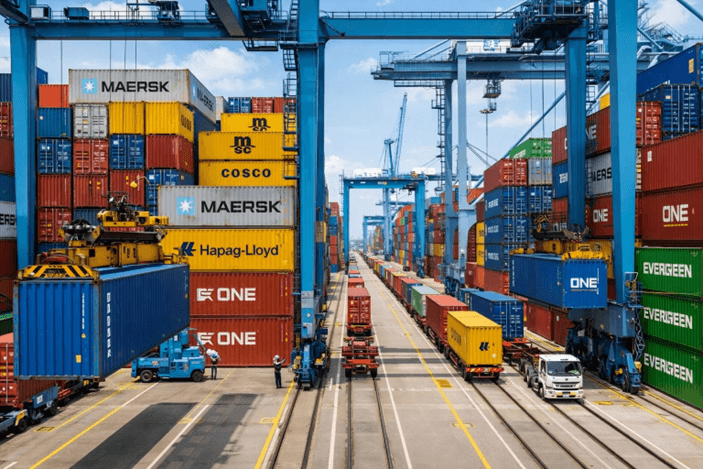
Regional Expansion Strengthens Cross-Border Logistics Network
Taiwan Navigation has significantly expanded its regional presence throughout 2025. The company established new subsidiaries in Singapore and Indonesia while increasing its ownership stake in THI Japan Co., Ltd. from 51% to 90%, strengthening its operational control in Japan.
Additionally, Taiwan Navigation signed an acquisition agreement for Korea-based SKYMASTER EXPRESS INC., securing full ownership and reinforcing its Korean market presence. Together, the Japanese and Korean subsidiaries now form a strategic “dual-core Northeast Asia hub.”
The company has also strengthened its Southeast Asian logistics network across Vietnam, Singapore, Malaysia, Subic Bay in the Philippines, and Indonesia. By positioning Taiwan as a central integration hub connecting China, the United States, and Asia-Pacific markets, the group is building a comprehensive and flexible cross-regional logistics infrastructure.
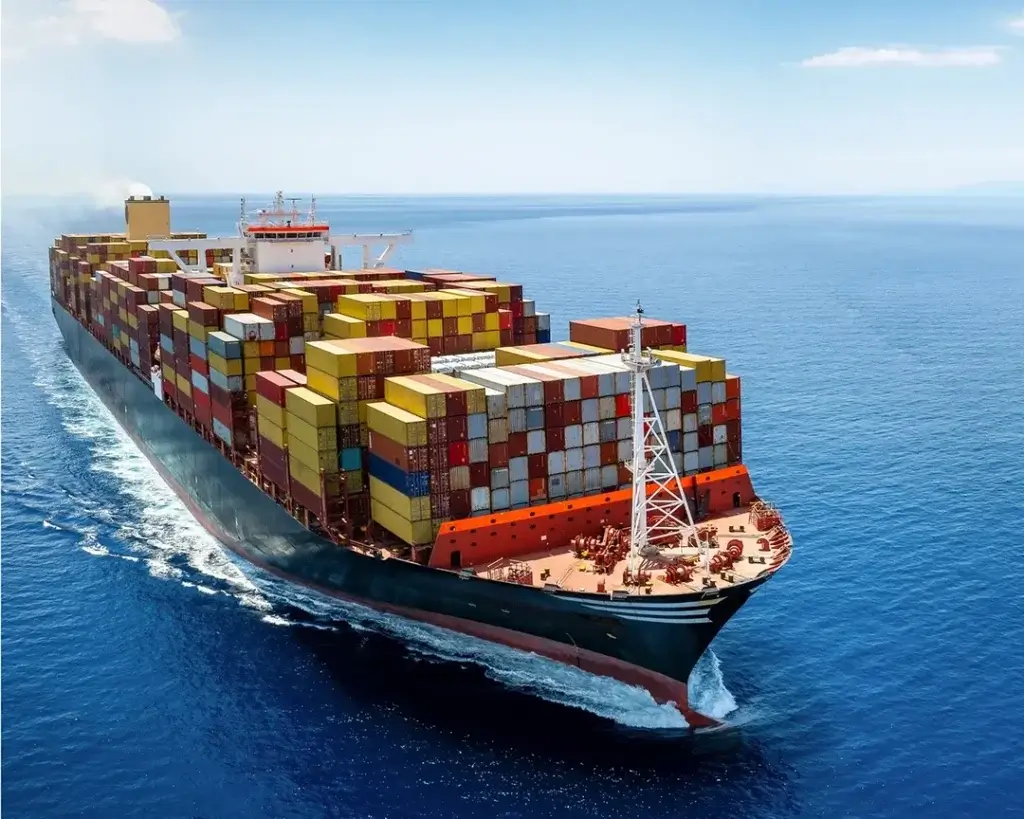
Freight Rate Pressures Expected as Vessel Supply Expands
The U.S. Department of Agriculture’s weekly Grain Transportation Report forecasts declining ocean freight costs in 2026, largely due to increased vessel availability. Meanwhile, easing geopolitical tensions in the Red Sea region may allow vessels to resume navigation through the Suez Canal, improving fleet efficiency and placing downward pressure on freight rates.
High-Tech Cargo Supporting Regional Air Freight Demand
Dimerco Express Group reported consolidated revenue of NT$2.352 billion for January 2026, representing a 2.4% year-over-year increase. Growth was driven primarily by cargo volume expansion, with air freight volumes rising nearly 30% and ocean freight volumes increasing nearly 20%.
Despite volume growth, declining freight rates have limited overall revenue expansion. Demand from Asia to Europe and the United States has softened slightly, reflecting slowing e-commerce shipments and seasonal adjustments ahead of the Lunar New Year.
In contrast, intra-Asia logistics activity remains resilient, supported by high-tech, high-value, and time-sensitive shipments. Capacity constraints are expected to tighten across key regional routes, particularly shipments from China to Taiwan, Singapore, Malaysia, India, and Thailand.

Shipping Companies Seek to Avoid Price Competition
Trans-Pacific shipping routes have maintained relatively stable freight rates despite weakening demand. Since late 2025, shipping carriers have attempted to stabilize pricing through capacity management and coordinated rate adjustments. However, industry observers note that these efforts primarily aim to prevent destructive price competition rather than reflect strong underlying demand.
While Lunar New Year shipping activity may temporarily support freight demand, a significant pre-holiday shipment surge has yet to materialize, leaving market outlook uncertain.
Digital Transformation and AI Reshaping Logistics Operations
Supply chain risk management is emerging as a major operational priority. While tariff policy uncertainties dominated global logistics risks in 2025, compliance enforcement and regulatory risk management are expected to become key industry challenges in 2026.
Dimerco continues to expand AI-driven digital transformation across global operations. The company applies artificial intelligence in operational management, process automation, decision-making analytics, and document control systems, improving service efficiency and compliance capabilities.
To date, Dimerco has deployed more than 30 AI applications globally, covering customer data processing, automated order management, cargo monitoring, financial settlement, and customer service automation. These initiatives have increased productivity by over 25% across multiple global operational sites, with some facilities achieving more than 50% automated order processing and full AI-driven financial workflow automation.
U.S. Maritime Regulation Expands Focus on Geopolitical Risk
The U.S. Federal Maritime Commission (FMC) is expanding its regulatory scope to address geopolitical risks affecting global shipping operations. Newly appointed FMC Chair Laura DiBella emphasized that protecting U.S. commercial interests will require increased oversight of maritime chokepoints, shadow tanker fleets, and international shipping compliance.
Recent FMC investigations include risks surrounding the Strait of Malacca and foreign ship registry practices often associated with shadow fleets. The agency is also reviewing port access restrictions imposed by certain countries during geopolitical conflicts.
Fitch Warns of Weakening Global Shipping Outlook
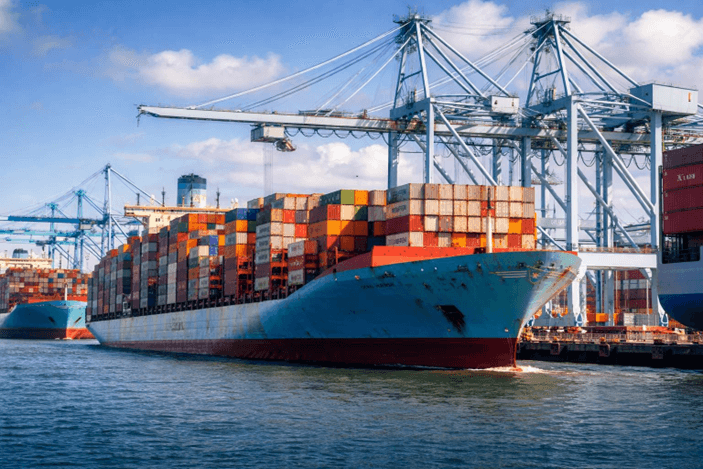
Fitch Ratings has maintained a negative outlook on the global shipping industry, citing geopolitical uncertainties, policy risks, and slowing economic growth across major economies. Container shipping demand is expected to weaken, while tanker shipping may remain relatively resilient. The dry bulk sector is forecast to remain stable but with limited growth momentum.
《 Crosswise news Industry Outlook 》
Structural Adjustment Creates Both Risk and Opportunity
Overall, the global shipping industry is expected to face three major structural trends moving forward :
- Expanding vessel supply placing pressure on freight rates
- Diverging demand across regions and industries
- Increasing importance of digital transformation and supply chain diversification
- Industry leaders suggest that logistics operators capable of integrating regional networks, expanding value-added services, and investing in digital transformation will be better positioned to capture growth opportunities amid ongoing market volatility.