
Financial Flash│By Lee, Chen-Lin ( Daniel Lee )李振麟
In recent months, international copper prices have continued to surge, with London Metal Exchange (LME) quotations briefly surpassing US$11,000 per metric ton, marking a new high for 2025. Yet the market has produced sharply divergent interpretations. Many argue that this rally is not driven by genuine supply-demand fundamentals, but rather the result of deliberate financial manipulation—a “century-long hoax” orchestrated jointly by Wall Street funds and political forces.
Illusory Prosperity: Soaring Prices and a Flood of Headlines
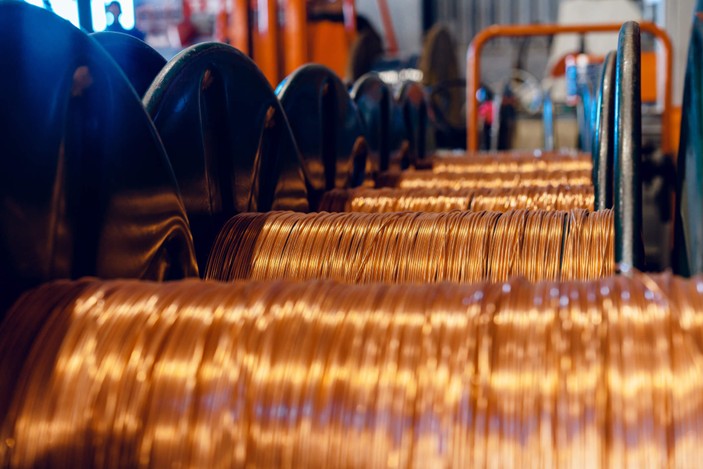
Since August 2025, copper prices have climbed from US$9,600 to US$10,900, a jump of more than 13% in just three months. Media outlets have repeatedly reported themes like “global supply tightness,” “Indonesian mine accidents,” and “booming demand from the energy transition,” portraying copper as if it had suddenly become one of the scarcest resources on Earth.
However, some manufacturers and analysts point out that these narratives are strikingly similar across reports—almost as if they all originated from the same press release. Further investigation reveals that many such stories were actually driven by “research reports” released by international funds and investment banks, shaping market sentiment and drawing speculative capital into the market.
Financial Engineering: The Symbiotic Chain Between Funds and the Media
Market observations indicate that certain U.S. funds had already built large positions in copper futures and options as early as early August. They then relied on their “research units” and “energy consultants” to frequently publish optimistic forecasts, allowing the “copper shortage” narrative to quickly dominate mainstream market discourse.
Actual Inventory: The Gap Between the “Shortage” Narrative and Reality
If a genuine supply shortage existed, it should be clearly reflected in inventory data. However, according to the latest figures from the LME and the Shanghai Futures Exchange, global registered inventories did not decline between August 2025 and November 2025; instead, they increased slightly. This indicates that the physical market has not experienced any real shortage. Rather, the financial market has used futures and quoted prices to create the illusion of “tight supply.”
A metal trader put it bluntly: “The market keeps shouting about shortages, but the warehouses are full. Prices go up every day—not because of demand, but because of pure speculation.”
Real-World Damage: Manufacturing Faces No Orders and Soaring Costs
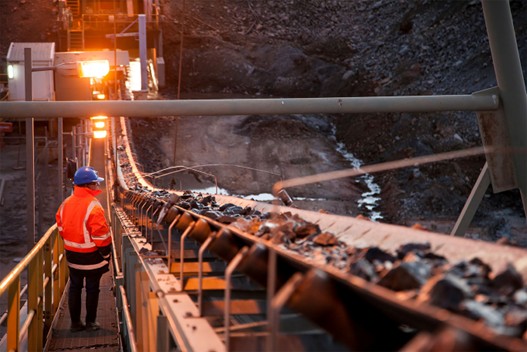
For the real economy, the copper price surge has been nothing short of a disaster. Many midstream and downstream manufacturers report that once copper prices exceed US$9,500 per ton, customers immediately halt orders, fearing they cannot absorb the rising costs. Industries such as wires and cables, motors, transformers, copper tubes, and copper sheets have all seen sharp declines in orders. Inventory turnover has slowed, and corporate profit margins have been squeezed—many even slipping into losses.
Countless small and medium-sized business owners lament: “ Copper prices may be high, but there is no actual demand. Manufacturing profits are being eaten up by financial speculation, leaving us no choice but to suspend taking orders. ”
Weak Demand: AI and New Energy Hype Has Not Translated Into Real Consumption
On the demand side, although many emphasize that “AI servers, electric vehicles, and green energy grids will boost copper demand,” actual consumption from these sectors remains far below traditional market expectations.
AI server production, concentrated in Taiwan, the U.S., and China, does increase demand for high-purity copper wire, but this accounts for only a small share of global copper usage. New energy and electric vehicles may have strong long-term potential, but in the short term, high interest rates and weakening economic conditions have led many companies to postpone investments. Real demand has not risen alongside prices.
Risk of a False Rally: When Financial Bubbles Collide With Manufacturing Reality
Overall, the current copper rally looks more like the return of a financial bubble. Funds have exploited geopolitical tensions, green energy narratives, and media storytelling to amplify fear and lure retail investors and corporate hedging capital into the market. Once prices are pushed to extremes, major players unload their positions—leaving behind overpriced inventories and idle factories.
This kind of “capital extraction” inflicts far greater damage on the real economy than any short-term profit. Global manufacturing demand has not improved; instead, high costs and weak orders have pushed many sectors into stagnation.

Conclusion: The Real Test Lies in Inventories and Orders
How can we determine whether this is truly a “century-long hoax”? The key indicators are twofold:
First, inventory levels: If official warehouse stocks continue to rise while the market still claims a shortage, it clearly suggests that speculation—not fundamentals—is driving the narrative.
Second, manufacturing orders: If midstream and downstream manufacturers continue facing order cancellations and insufficient operating rates, it proves that the price surge is not being driven by real demand.
When financial speculation drifts away from fundamentals, prices will inevitably return to reality.
Whether copper prices truly represent an economic recovery—or are merely another game played by Wall Street—can be found in every forced production halt and every warehouse whose inventory keeps rising instead of falling.