
《 By Crosswise intelligence Report 》
〈 This article includes information provided by global communications agency MSL and is edited by Crosswise News 〉
CapitaLand Investment (CLI)’s wholly owned lodging business unit, The Ascott Limited (Ascott), achieved a record in 2025 by signing 19,000 units across 102 properties, representing a 27% year-on-year increase in newly signed units. This expansion was driven mainly by an asset-light strategy, led by high-yield segments such as resorts, and supported by accelerating franchise momentum and growth in conversion projects.
Ascott has now entered more than 10 new cities across Asia Pacific and Europe, expanding its global footprint to more than 40 countries and 230 cities. The company currently has more than 1,000 properties in operation and under development worldwide, with total units exceeding 176,000.
Kevin Goh, Chief Executive Officer of The Ascott Limited, said 2025 marks a important milestone for the company. By accelerating asset-light signings, the company enhanced revenue visibility, and it expects management fee income to exceed S$500 million as its development pipeline progressively comes into operation.
He noted that Ascott’s flexible hybrid operating model and multi-brand strategy enable it to help owners optimize performance across different market cycles, while continuing disciplined investment in loyalty, technology applications, and business development. The company is also actively expanding into high-yield segments, including “resorts,” “branded residences,” as well as the “meetings” and “wellness travel” markets.
Serena Lim, Chief Growth Officer of The Ascott Limited, said that travel increasingly becomes part of a lifestyle, travelers’ demand for flexible and experiential living has risen significantly. Guided by insights from owners and guests, the company is advancing flexible living accommodation and hybrid product strategies.
She pointed out that about 30% of new signings in 2025 came from existing partners expanding together with Ascott, demonstrating strong trust in the Ascott platform and its integrated brand capabilities, and also reflecting the company’s ability to effectively meet diverse global accommodation needs.
Strategic City Expansion Continues to Scale In 2025, Ascott entered more than 10 new cities across Asia Pacific and Europe, including key locations such as “Wellington” and “Taipei,” while also expanding in popular resort markets including “Phuket,” “Phu Quoc,” and “Langkawi,” as well as emerging Indian cities such as “Lucknow” and “Thanjavur.”
The company also expanded the Quest brand into “New Zealand,” and enabled the “lyf” brand to debut in Wellington for the first time. The project is expected to break ground by the end of 2026, converting six floors of a commercial building in the city center into a 108-key property. It will combine lyf’s signature social spaces and connected rooms, targeting group travelers and long-stay demand.
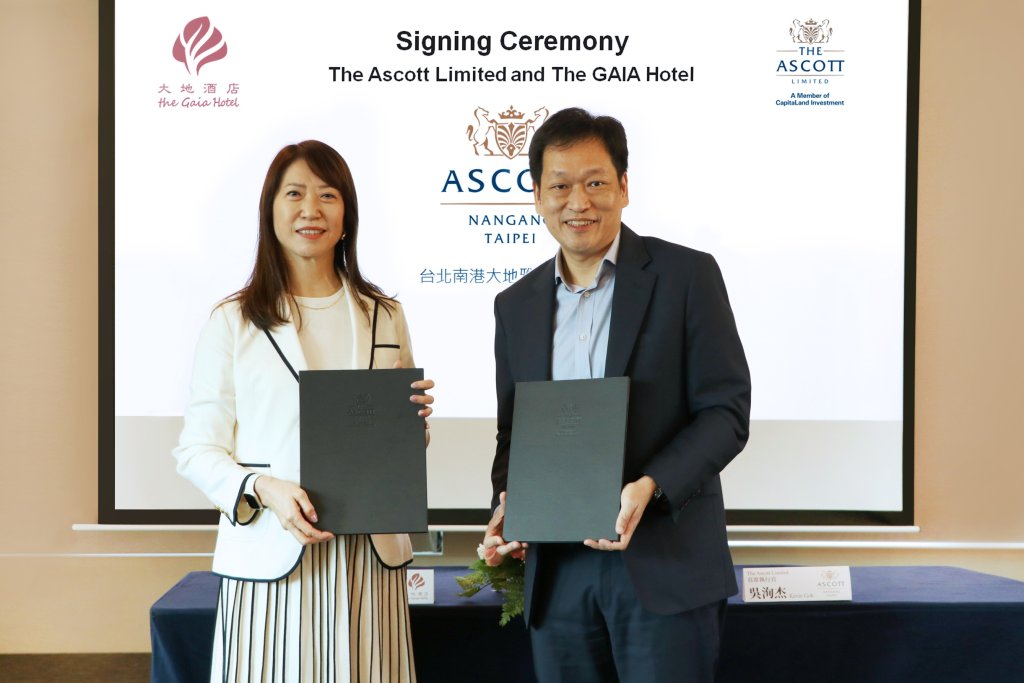
Flagship Presence in Taipei Nangang Ascott is also entering the Taipei market with a flagship serviced residence, “Ascott Nangang,” located in the “Nangang Software Park.” The project will feature 185 rooms and is scheduled to open in the first quarter of 2027.
“Nangang Software Park” is a major commercial and technology cluster in Taipei, hosting the headquarters of multiple multinational corporations, including “HP,” “Yahoo,” “Philips,” and “Intel,” while also offering a comprehensive MICE and tourism ecosystem.
The property is situated in a well-connected core area, close to the “Nangang Exhibition Center,” “MRT station,” and the “LaLaport shopping complex,” and within walking distance of the “Nangang High Speed Rail Station.” Ascott stated that the project will leverage its expertise in transit-oriented and mixed-use developments to meet both short-stay and long-stay accommodation needs.
Resort Portfolio Continues to Expand Driven by a rebound in global leisure travel demand, Ascott signed 15 resort projects under its multi-brand strategy, across tourism hotspots such as “Phuket,” “Phu Quoc,” “Nha Trang,” and “Bali,” expanding its resort portfolio to more than 50 properties.
These include the 693-unit HARRIS Resort Cam Ranh in Vietnam, as well as the Lagoon City development in Seville, Spain, which combines 250 residential units and 120 Somerset accommodation units, designed around an 18,000-square-meter artificial lagoon as its centerpiece.
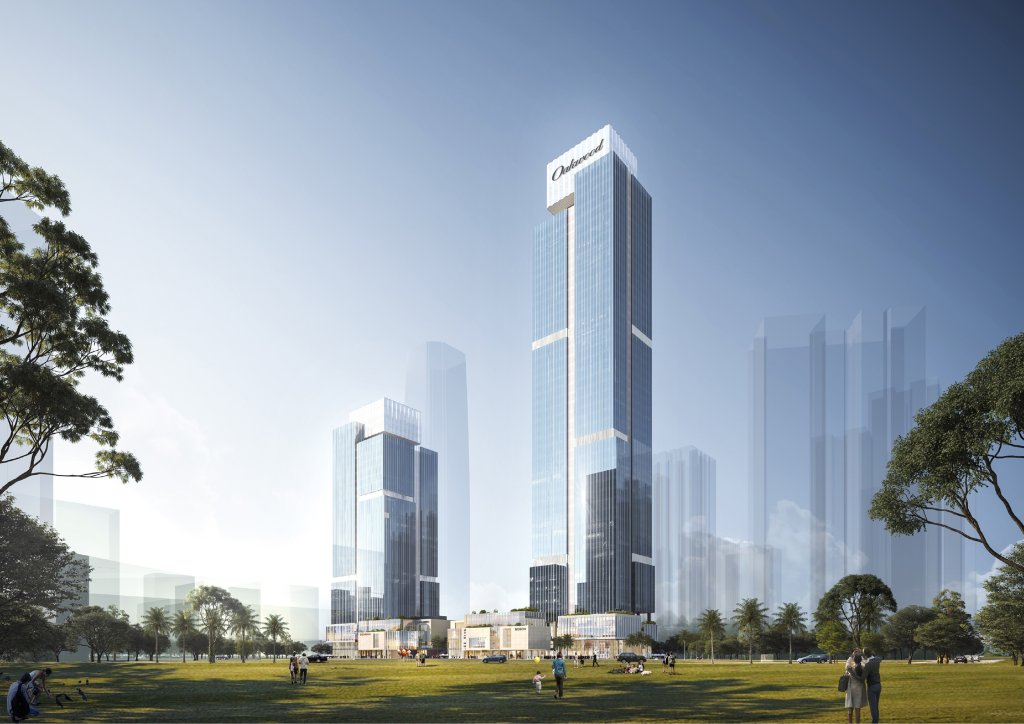
Integrated Development of Branded Residences and Hotels Ascott has also expanded its branded residences portfolio by adding more than 1,000 units through partnerships with premium developers. This includes Ascott Above Patong Phuket Residences in Phuket, and the Oakwood Premier branded residences in Shenzhen co-located with Oakwood Premier Luohu Shenzhen.
The company noted that co-locating branded residences with hotels can enhance operational and marketing efficiency, create diversified revenue streams, and strengthen Ascott’s value proposition to investors and owners.
Franchising and Conversions Become the Main Growth Engines Of the units signed in 2025, more than one quarter came from franchising, indicating that the asset-light strategy continues to gain traction. Through a joint venture with “China’s Jin Jiang Group,” the company secured five Quest projects in China and expanded the Citadines brand footprint in the Chinese market.
The largest franchising signing of the year was the 510-key “Oakwood Resort” development in Gangneung, South Korea. The project is located within the Gangneung Cultural Olympic Special Zone and benefits from strong connectivity to Seoul, demonstrating Oakwood’s expansion capability in the leisure and long-stay markets.
In addition, the Quest brand added five new locations in Australia, while Oakwood, Somerset, and The Unlimited Collection further expanded their global footprint through franchising agreements in Europe and Africa.
Conversion Projects Accelerate Asset Repositioning Ascott stated that more than 38% of its new signings in 2025 came from existing hotels or asset conversion projects, reflecting owners’ preference for a faster and lower-risk route to market, and Ascott’s ability to execute conversions efficiently across its diversified brand portfolio
Recent conversion examples include Citadines Antasari Jakarta, Oakwood Bencoolen Singapore, and lyf Zhangjiang Shanghai, all of which were completed within months of signing and commenced operations.
Multi-Brand Matrix Drives Global Expansion Ascott’s brands continued to expand in 2025. Citadines surpassed 200 properties globally, signing 17 new properties; Oakwood added 16 new locations, maintaining strong appeal in the “business” and “long-stay” markets.
The company also expanded into Europe and Africa through The Unlimited Collection, while The Crest Collection entered the Middle East.
In Morocco, following a new signing in Casablanca, Ascott’s portfolio in the country has reached 10 operating and pipeline properties, indicating strong growth potential in that market.
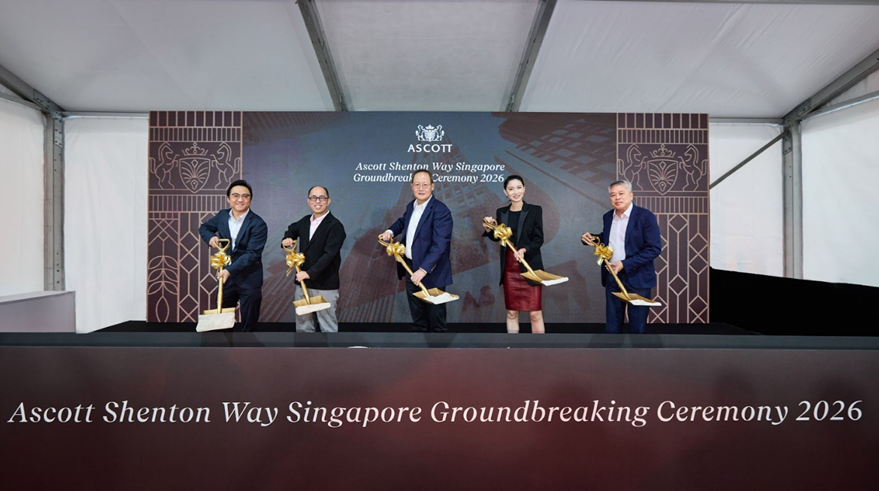
Flagship Brand Continues to Deepen Core Markets The Ascott brand added 10 new locations in 2025, bringing its global portfolio to 87 properties. Notable additions include Ascott Coronation Square Johor Bahru in the Johor–Singapore economic zone, and the brand’s third property in Singapore, Ascott Shenton Way.
Ascott Shenton Way Singapore combines hotel and serviced residence functions and introduces wellness and sustainable living concepts, demonstrating the brand’s continued strengthening of its presence in prime central business district locations.
“Crosswise News Crosswise Intelligence Analysis & Commentary”
Record Ascott Signings: The Global Lodging Industry Officially Enters a New Cycle of “Asset-Light Strategy and Lifestyle Accommodation”
Amid rapid transformation in the global hospitality and real estate investment markets, The Ascott Limited’s record of signing 19,000 units in 2025 not only demonstrates the company’s expansion speed, but also reveals a structural shift in the international lodging industry. From an industry strategy perspective, Ascott’s growth is not merely a market recovery; it reflects a dual-track transformation in which the global hospitality sector is moving into an “asset-light operating model” and an upgrade in “lifestyle accommodation demand.”
- Asset-Light Strategy Becomes the Mainstream Model for Global Hospitality Investment For the investment market, an asset-light strategy has three key advantages:
First, it reduces capital expenditure and market volatility risk.
Second, it accelerates the speed of global brand expansion.
Third, it improves cash-flow stability and investment returns.
Against the backdrop of relatively high interest rates and rising capital costs in the global real estate market, this model is regarded as a core strategy for multinational hospitality companies to strengthen financial resilience.
2. Lifestyle Accommodation Demand Reshapes the Lodging Industry Structure
Ascott’s active expansion into branded residences and mixed-use developments in recent years reflects that the global accommodation market is shifting from “short-term travel stays” to “living-and-working integrated” demand.
In particular, following the pandemic, the increase in remote work and cross-border talent mobility has driven rapid growth in the following product types:
Long-stay serviced residences
Co-living accommodation (Co-living)
Business-and-leisure blended travel (Bleisure Travel)
Ascott’s lyf brand, which emphasizes social spaces and shared-living design, is a key product strategy that aligns with the needs of a new generation of travelers and digital nomads.
3. Asia Pacific Becomes the Global Growth Engine for Lodging Investment From Ascott’s city expansion distribution, Asia Pacific remains the regio with the strongest growth momentum in the global lodging industry.
The Layout in Taipei, Wellington, and Southeast Asian resort cities indicates that the company is targeting three structural market opportunities:
First, business accommodation demand driven by technology and industry.
Second, resort investment driven by the recovery of Southeast Asian tourism.
Third, new markets created by rising middle-class demand and infrastructure upgrades in second-tier cities.
The Taipei Nangang Software Park is also of strategic significance. As Nangang is a core hub for Taiwan’s technology industry and the MICE economy, gathering multinational technology companies and exhibitions, it indicates that Ascott is targeting the“technology-industry accommodation supply chain.”
4. The Lodging Industry Is Highly Linked to the Structure of Urban Economies From Ascott’s Layout, accommodation investment is forming a highly symbiotic relationship with urban industrial structures.“Technology parks,”“MICE economy zones,”and“tourism resort zones”have become the three core nodes for accommodation investment.
5. Industry Outlook Observations Overall, Ascott’s record signings reflect three long-term trends in the global lodging industry:
- Brand and management output replacing heavy-asset operations
- Continued expansion of lifestyle accommodation demand
- Asia Pacific becoming the core growth region for global lodging investment
In the future, the competitive focus of the lodging industry will gradually shift from “hardware scale” to “brand and lifestyle experience design capability.”
《 Crosswise News” Concluding Observations 》
Ascott’s expansion is not merely a single-company growth case; it is an important reflection of the transformation of the global lodging industry. As the boundaries between “travel,” “work,” and “life” become increasingly blurred, the accommodation market will further move toward long-term residentialization, “community-based” models, and integrated “lifestyle services.” Asia Pacific, in particular, driven by the dual engines of the “technology industry” and the “tourism economy,” is expected to continue being one of the most promising markets for global lodging investment.
Source Disclosure:
Portions of this report are based on materials provided by MSL.