
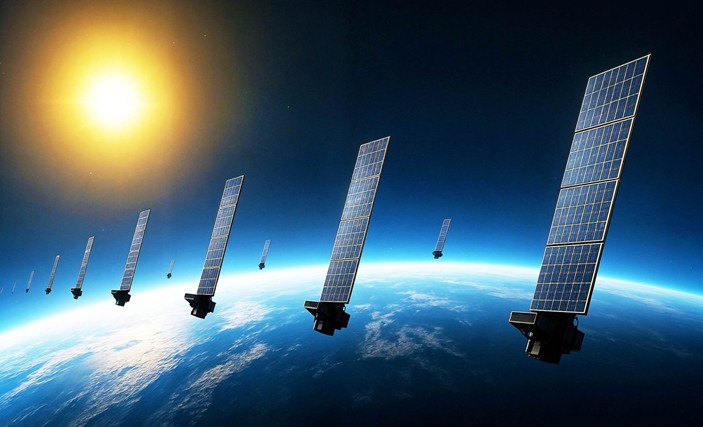
The global satellite communications landscape is entering a new phase of major technological advancement. US-based SpaceX is accelerating the development of the second-generation Starlink satellite communications system and plans to launch a large-scale upgraded version by 2027, aiming to build a faster, lower-latency, and globally covered “space fiber-level network.”
According to the latest filings with the US Federal Communications Commission (FCC), SpaceX has reserved significant spectrum resources for the second-generation Starlink system and plans to substantially enhance network performance. Market analysts note that Starlink 2.0 will not merely extend existing satellite broadband services but will represent a critical technological leap toward direct connectivity between satellites and mobile phones and end devices.
Current Status of Starlink: Coverage Exceeds 400 Million People
The first-generation Starlink system has become one of the largest low Earth orbit (LEO) satellite networks in the world, with the number of satellites in orbit approaching 10,000. Its service coverage spans multiple remote regions, maritime markets, and aviation sectors worldwide.
Starlink’s network has already reached more than 400 million people, with monthly active users exceeding 6 million, and continues to expand into government, enterprise, and military applications. However, this is still considered an early-stage deployment. SpaceX founder Elon Musk has repeatedly emphasized that satellite networks will become a core pillar of global digital infrastructure and could potentially reshape the telecommunications industry landscape.
Second-Generation Starlink Receives Regulatory Approval, Satellite Count Set to Double
The FCC recently approved SpaceX’s deployment of an additional 7,500 second-generation Starlink satellites, increasing the total number of approved Gen2 satellites to 15,000. This decision is widely regarded as a major milestone for Musk in the global satellite internet race.

The FCC has also authorized SpaceX to operate across multiple frequency bands and relaxed satellite coverage overlap restrictions, enabling Starlink to more flexibly allocate global network resources. The new-generation satellites will support “Direct-to-Cell” technology, allowing smartphones to connect directly to satellites without relying on terrestrial base stations. Industry observers believe this technology will bring revolutionary impacts to communications in remote areas, disaster response, maritime operations, and the aviation industry.
Fiber-Level Speed Targets Signal Major Performance Leap for Satellite Networks
SpaceX plans to significantly increase transmission speeds and system capacity through its next-generation satellite architecture, targeting fiber-equivalent network performance with speeds of up to 1 Gbps.
FCC Chairman Brendan Carr described the authorization as a “game changer for next-generation network services,” stating that it will provide unprecedented broadband capabilities for underserved communities worldwide. However, the FCC has also imposed limits on the total number of satellites, approving only about half of SpaceX’s original plan for nearly 30,000 satellites, with additional deployments subject to further technical and safety reviews.
Strict Deployment Timeline Pushes Starlink into Military-Grade Launch Cadence
To prevent spectrum resources from being left idle, regulators have set strict deployment milestones for SpaceX:
By November 2027: Completion of the first batch of 7,500 satellites
By December 2028: Deployment of at least 50% of second-generation satellites
By December 2031: Launch of all approved satellites
This timeline implies that Starlink will enter a high-density launch cadence, with SpaceX’s rocket launch capabilities and satellite manufacturing capacity becoming key competitive advantages.
Major Orbital Adjustment: Satellites to Move Down to 480 km by 2026
In addition to expanding satellite numbers, SpaceX is also adjusting its Starlink orbital strategy. Beginning in 2026, the company plans to lower its primary satellite orbit altitude from approximately 550 km to 480 km to improve operational safety and reduce space debris risks.
SpaceX engineers stated that lower orbits can reduce collision probabilities and allow failed satellites to re-enter Earth’s atmosphere and burn up more quickly, helping to mitigate the growing problem of space debris. This move is also seen as a key technical strategy for managing large-scale satellite constellations and creating more controllable orbital space for future expansion.
Rising Space Debris Risks Raise Industry-Wide Concerns
Starlink’s orbital adjustment is also linked to recent satellite incidents. In 2025, a Starlink satellite malfunctioned at an altitude of approximately 418 km and generated debris, raising concerns about the risks associated with mega-constellations.
As multiple global operators race to deploy constellations with tens of thousands of satellites, congestion in low Earth orbit is rapidly increasing. Experts warn that any single-point failure could trigger cascading effects, posing potential threats to global space activities.
Global Communications Landscape Set for Reshaping
Analysts widely believe that Starlink 2.0 represents more than a technology upgrade and could disrupt traditional terrestrial telecommunications infrastructure models. If direct-to-cell satellite services mature, remote regions, maritime shipping, airlines, and even military communications could bypass ground-based base stations and enter a “global satellite direct-connect era.”
The market expects Starlink to compete aggressively with Amazon’s Kuiper, OneWeb, and satellite initiatives in China and Europe. Satellite internet is increasingly viewed as a key battlefield in geopolitical and technological competition.
Investment Impact Analysis: Starlink 2.0 on Telecom, Semiconductor, and Aerospace Industries
Structural Industry Disruption
The full-scale upgrade of Starlink 2.0 is expected to transform satellite communications from a supplementary network into a foundational global communications layer, creating structural disruptions across three major industries:
Telecommunications: Disruption of existing market structures
Semiconductors: Surge in demand for AI intelligence and space computing
Aerospace: Entry into a new satellite manufacturing and launch cycle
Starlink 2.0 is expected to become the primary battleground for global communications and computing capital expenditure over the next decade.

Disruptive Impact on the Telecommunications Industry
Starlink 2.0 will effectively function as a borderless global telecommunications operator, posing long-term structural headwinds for traditional telecom companies. Potential impacts include:
Replacement of terrestrial base station investments in remote regions Disruption of roaming markets, maritime communications, and aviation connectivity models
Erosion of pricing power for traditional telecom operators
Companies potentially affected include AT&T, Verizon, Deutsche Telekom, Chunghwa Telecom, and NTT Docomo.
Structural Upside for the Semiconductor Industry
Conversely, Starlink 2.0 is expected to bring structural positive impacts to the semiconductor industry, marking the emergence of a “space computing platform.” This will drive long-term growth in demand for AI chips, networking processors, RF components, and high-performance memory.
Crosswise News Investment Conclusion
Starlink 2.0 is not merely an upgrade of satellite networks, but the starting point of a global shift in digital infrastructure power.
Space-based networks are set to become the fourth layer of digital infrastructure, integrating with AI and the digital economy.